Table of Contents
Introduction
Mini excavators are available in several weight and performance classes, ranging from highly compact machines for gardens and narrow entrances to heavier models capable of utility trenching, foundation excavation, and demanding construction work. Although they may share a similar basic structure, different mini excavator sizes provide noticeably different digging depth, bucket capacity, stability, hydraulic output, transport requirements, and attachment capability.
Choosing the correct size is not simply a matter of selecting the most powerful machine that can enter the site. A machine that is too small may struggle with excavation depth, dense ground, large attachments, or repeated material handling. A machine that is unnecessarily large may have difficulty passing through gates, operating beside buildings, protecting finished surfaces, or being transported efficiently.
The most suitable excavator is the smallest machine that can complete the required work safely and productively while retaining enough performance margin for actual ground conditions. This guide compares common mini excavator sizes and explains how to select a suitable weight class according to access, digging depth, bucket capacity, ground conditions, transport, attachments, and project type.
What Determines the Size of a Mini Excavator?
Mini excavator size is usually described by operating weight. A 1.2-ton machine, for example, has an approximate working weight of 1,200 kilograms. Operating weight generally includes the base machine, standard bucket, fluids, fuel, and operator, although the exact measurement method can vary between manufacturers.
Weight is only the first part of the classification. Two excavators with a similar operating weight can have different widths, arm lengths, tail-swing radii, engine outputs, bucket capacities, and hydraulic configurations. This means that selecting a mini excavator by tonnage alone can lead to an unsuitable machine.
According to the general definition of a compact excavator, machines in this category commonly use a tracked or wheeled undercarriage, a backfill blade, a rotating upper structure, and hydraulically operated working equipment. The category covers a broad range, so actual specifications must be evaluated at model level.
The most important size-related specifications include:
- Operating weight
- Overall machine width
- Overall height and transport length
- Maximum digging depth
- Maximum digging radius
- Bucket capacity
- Bucket breakout force
- Engine output
- Auxiliary hydraulic flow
- Tail-swing radius
- Blade width
- Ground pressure
- Lift capacity at different working radii
These specifications work together. Operating weight influences stability, while boom and arm geometry determine reach. Hydraulic output affects attachment performance, and machine width determines whether the excavator can enter and move around the site.
Common Mini Excavator Size Classes
There is no single international classification system used by every manufacturer. However, compact excavators can be divided into practical weight classes based on their common applications and operating characteristics.
| Size class | Approximate operating weight | Typical applications | Main advantage | Main limitation |
|---|---|---|---|---|
| Micro excavator | Below 1 ton | Indoor work, narrow gardens, light landscaping | Extremely compact access | Limited digging and lifting capability |
| Very small mini excavator | 1–1.5 tons | Garden drainage, cable trenches, property maintenance | Easy transport and maneuverability | Lower stability with heavy attachments |
| Small mini excavator | 1.5–2 tons | Landscaping, irrigation, residential utility work | Balance between access and performance | Limited capacity for demanding excavation |
| Mid-size mini excavator | 2–3 tons | Foundations, utility trenches, municipal projects | Greater digging force and attachment range | Requires more transport and site clearance |
| Large mini excavator | 3–5 tons | Construction, deeper trenching, roadwork, material handling | Stronger stability and productivity | Larger operating and transport footprint |
| Heavy compact excavator | 5–8.5 tons | Commercial construction and infrastructure | Higher lift and excavation capability | Less suitable for restricted residential sites |
These classes should be treated as practical reference points rather than strict definitions. A well-designed 1.8-ton machine may perform differently from another model in the same class because of its hydraulic system, arm geometry, undercarriage, and standard equipment.
Comparing Harddig Mini Excavator Sizes
Harddig’s current compact excavator range covers several commonly used weight classes, from 1.2-ton machines for restricted areas to a 3.9-ton model for more demanding work.
| Harddig model | Operating weight | Bucket capacity | Engine output | Maximum digging depth | Suitable project profile |
|---|---|---|---|---|---|
| Mini Excavator 10 | 1,200 kg | 0.024 m³ | 12–13.5 HP | 1,620 mm | Garden work, narrow access and light excavation |
| Mini Excavator 12U | 1,200 kg | 0.024 m³ | 12–13.5 HP | 1,620 mm | Landscaping, drainage and property maintenance |
| Mini Excavator 16 | 1,795 kg | 0.04 m³ | 10.3–16.4 HP | 1,700 mm | Residential construction and utility installation |
| Mini Excavator 25 | 2,780 kg | 0.06 m³ | 25.2–29.5 HP | 2,200 mm | Foundations, municipal projects and general construction |
| Mini Excavator 35 | 3,875 kg | 0.12 m³ | 33.5 HP | 2,950 mm | Deeper trenching, larger excavation and professional applications |
The full Harddig mini excavator range allows different weight classes to be compared alongside engine configuration, digging depth, bucket capacity, and project requirements.
The progression between these models shows how excavator capability changes as operating weight increases. The 1.2-ton machines prioritize compact access, while the 2.8-ton and 3.9-ton models provide greater bucket capacity, digging depth, and working stability.
Under 1-Ton Micro Excavators
Micro excavators are designed for extremely restricted locations. Their narrow undercarriages may allow them to pass through garden gates, doorways, side passages, or indoor access points that cannot accommodate a standard mini excavator.
These machines are commonly used for light landscaping, small drainage channels, floor removal, narrow utility trenches, and interior renovation. Their low operating weight can reduce pressure on finished surfaces and simplify transportation.
The trade-off is limited digging force, depth, lift capacity, and attachment weight. A micro excavator can be highly productive when its compactness is essential, but it should not be expected to perform like a heavier machine in dense clay, rocky ground, deep trenching, or repeated loading work.
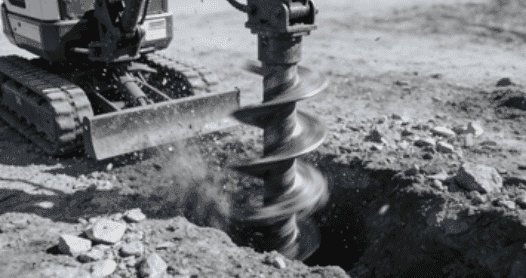
Attachment selection also requires care. A breaker, auger, or grapple that is too heavy can significantly affect stability and hydraulic performance. Micro excavators are most effective when used with lightweight buckets and attachments designed specifically for their carrier class.
1 to 1.5-Ton Mini Excavators
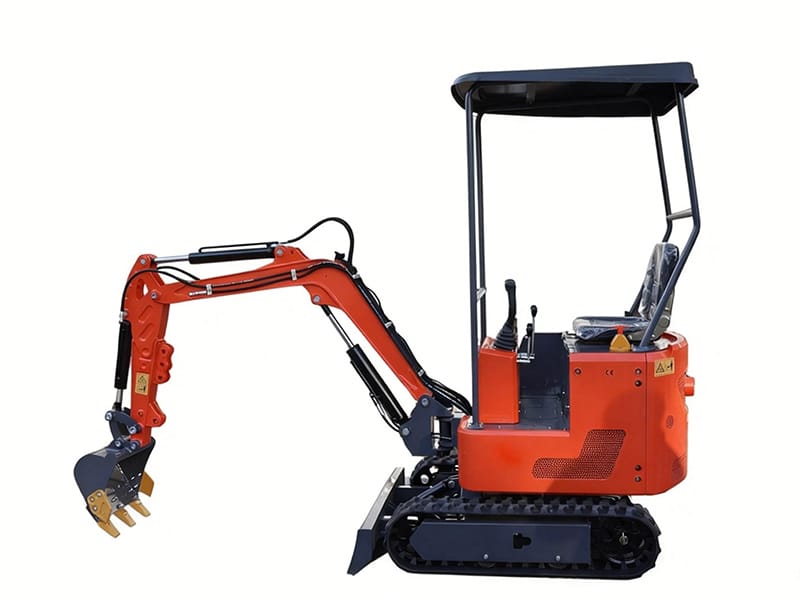
The 1 to 1.5-ton class is often suitable for residential landscaping, garden renovation, drainage, irrigation, cable installation, and property maintenance. These machines combine compact dimensions with more usable digging performance than a micro excavator.
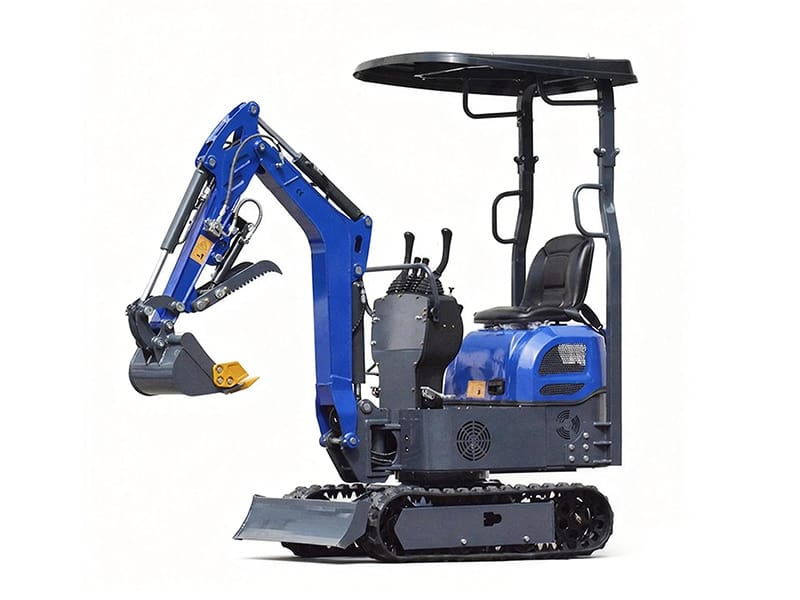
The Harddig 1.2T Mini Excavator 12U has an operating weight of 1,200 kg, a 0.024 m³ bucket, and a maximum digging depth of 1,620 mm. Rubber tracks and a compact structure make this size relevant to sites where access and surface protection are important.
A 1.2-ton excavator can be easier to transport and position than a larger machine. It can work around houses, fences, gardens, and narrow passages while supporting common attachments such as small buckets, augers, rippers, and lightweight breakers.
Its limitations become more apparent when the work involves heavy lifting, very hard ground, deep trenches, large buckets, or continuous commercial production. The operator must also pay close attention to stability when the arm is extended across the side of the tracks.
1.5 to 2-Ton Mini Excavators
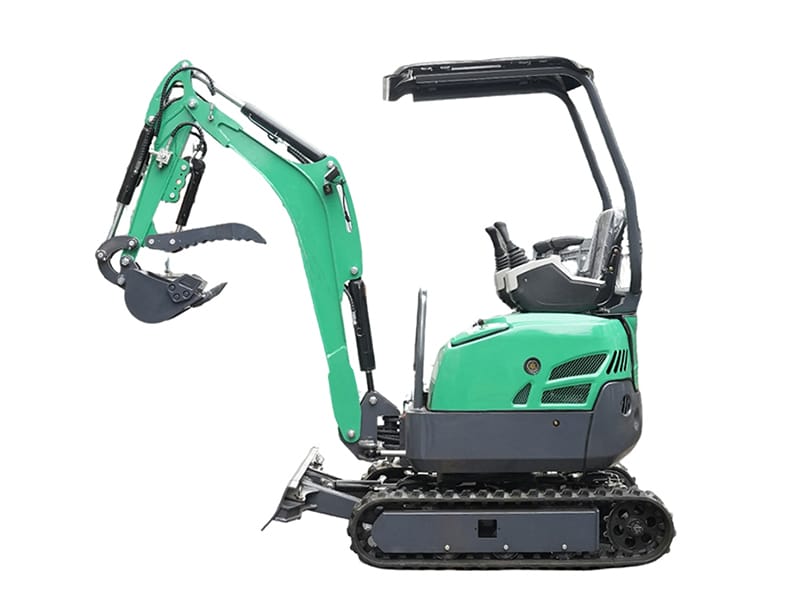
The 1.5 to 2-ton class provides a practical balance between compact access and useful excavation performance. These machines remain suitable for residential sites but usually offer more bucket capacity, stability, hydraulic capability, and operator space than a 1-ton machine.
Typical applications include:
- Residential utility installation
- Irrigation and drainage
- Small foundations
- Landscape construction
- Fence and post-hole work
- Light demolition
- Roadside maintenance
- Farm and property projects
The Harddig Mini Excavator 16 has an operating weight of 1,795 kg, a 0.04 m³ bucket, and a maximum digging depth of 1,700 mm. Compared with a 1.2-ton machine, the additional weight supports improved stability and a larger bucket while maintaining compact dimensions.
This size can be useful for contractors who need one machine for several types of smaller projects. It is still important to verify access width, transport requirements, hydraulic flow, and attachment weight rather than selecting the machine by tonnage alone.
2 to 3-Ton Mini Excavators
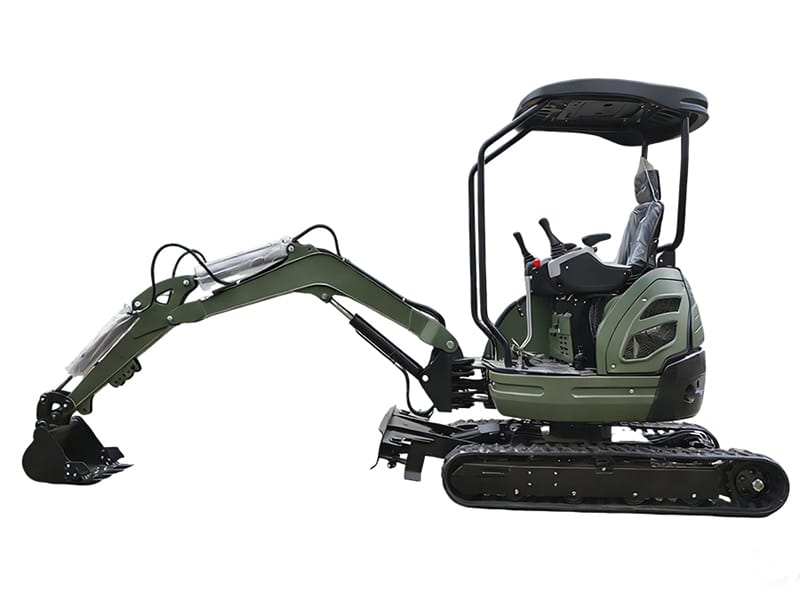
A 2 to 3-ton mini excavator moves beyond light residential work and into general construction, utility, municipal, and commercial landscaping applications. The added weight generally provides greater digging force, deeper reach, higher lift capacity, and improved stability.
The Harddig Mini Excavator 25 has an operating weight of 2,780 kg, a 0.06 m³ bucket, and a maximum digging depth of 2,200 mm. Its Kubota engine options provide 25.2 or 29.5 HP, supporting more demanding excavation and a broader attachment range.
This class is suitable for tasks such as foundation excavation, larger drainage systems, utility trenches, road-edge work, small demolition, and repeated material loading. It may also support hydraulic breakers, augers, grapples, and compaction equipment more effectively than lighter machines.
The larger footprint should be considered during site planning. A 2.8-ton excavator requires more turning room, stronger transport equipment, and suitable ground conditions. On very narrow residential sites, the increase in performance may not compensate for limited access.
3 to 5-Ton Mini Excavators
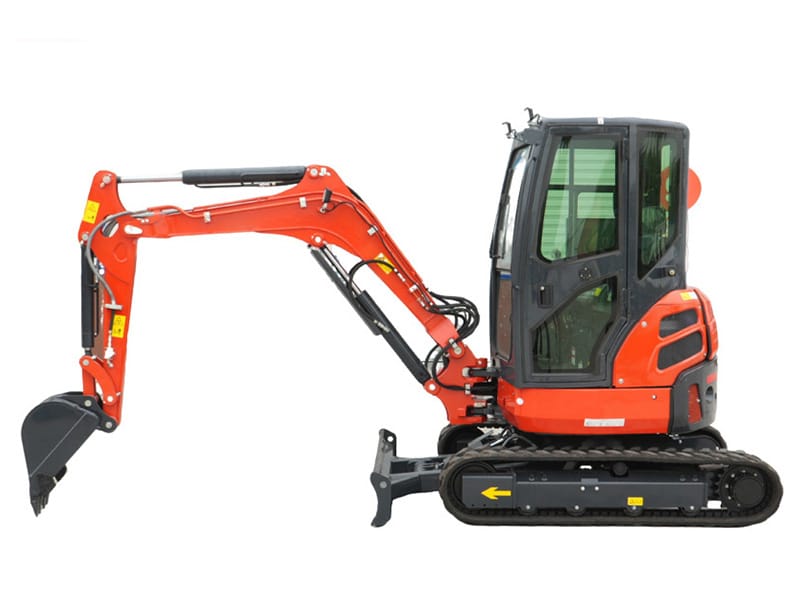
The 3 to 5-ton class is designed for professional projects that require stronger excavation performance without moving to a full-size excavator. These machines are frequently used for deeper utility work, larger foundations, municipal maintenance, road construction, site preparation, and material handling.
The Harddig Mini Excavator 35 has an operating weight of 3,875 kg, a 0.12 m³ bucket, a 33.5 HP Kubota V1505 engine, and a maximum digging depth of 2,950 mm. The increased weight and bucket capacity make it more suitable for higher-volume excavation and heavier attachments.
A machine in this class can remove more material per cycle, but productivity still depends on soil, trench dimensions, bucket selection, spoil placement, and operator technique. A larger bucket may be inefficient in hard ground or when the trench must remain narrow.
Transport planning becomes more important as machine weight increases. The combined weight of the excavator, trailer, attachments, fuel, and supporting equipment must remain within the rated limits of the transport vehicle and applicable local regulations.
Why Operating Weight Matters
Operating weight affects stability, traction, ground pressure, lifting capability, transportation, and the amount of force the machine can apply to the ground. It is therefore one of the most useful specifications for comparing mini excavator sizes.
A heavier machine can generally resist the forces created when the bucket penetrates compacted soil. It also provides a more stable platform for lifting and operating hydraulic attachments. However, heavier does not always mean more suitable.
Low-weight machines can be advantageous on lawns, finished paving, soft ground, and sites with access limitations. Rubber tracks can help distribute machine weight, but they do not eliminate the risk of surface damage or ground failure.
Operating weight should include the actual machine configuration. A cab, additional counterweight, long arm, quick coupler, heavy bucket, or hydraulic attachment can change total weight and balance.
How Machine Width Affects Access
Machine width is one of the first specifications to verify for restricted projects. The excavator must be able to pass through the narrowest entrance and still have enough clearance to travel safely.
When measuring access, consider more than the nominal width. Gates may not open completely, walls may be uneven, and roof edges or branches may restrict the upper structure. Soft shoulders and sloped entrances can also reduce usable clearance.
Some small excavators use a retractable undercarriage. The tracks can be narrowed for access and extended once the machine reaches the working area. The extended position generally improves stability, so the undercarriage should not remain narrow unless site conditions require it and the operating instructions permit it.
The working area must also be larger than the access route. A machine may fit through a gate but lack enough room to rotate, lower the blade, extend the arm, change attachments, or place excavated material.
How Digging Depth Changes with Excavator Size
Maximum digging depth generally increases with machine size because heavier excavators can support longer booms and arms. However, depth alone should not determine the selection.
Maximum digging depth represents the lowest point the bucket can reach under specified measurement conditions. The machine may be less productive at the extreme edge of its working envelope because bucket movement and filling angles become limited.
The required excavation depth should sit within a practical part of the machine’s working range. Projects with uneven ground, couplers, trench boxes, groundwater, or loose material at the bottom may require additional working margin.
For a closer explanation of rated and practical depth, Harddig’s guide to how deep a mini excavator can dig examines boom geometry, bucket design, ground position, soil conditions, and safe trench planning.
Bucket Capacity and Excavation Volume
Bucket capacity influences the amount of material removed during each digging cycle. As mini excavator sizes increase, standard bucket capacity normally increases as well.
A larger bucket can improve production in loose soil, but only when the excavator has sufficient weight, hydraulic capability, and stability. An oversized bucket may fill poorly in dense soil and create excessive load when lifted at full reach.
Bucket width should also match the trench. Removing unnecessary material increases backfilling requirements and may disturb more ground than the project allows. A narrow trenching bucket may therefore be more productive than a wider bucket, even though it carries less material per cycle.
When comparing bucket capacity, consider:
- Material density
- Soil moisture
- Required trench width
- Digging resistance
- Dumping position
- Working radius
- Machine lift capacity
- Bucket and coupler weight
The correct bucket is part of the machine-sizing decision rather than an accessory selected after the excavator has already been chosen.
Hydraulic Capacity and Attachments
Larger excavators generally provide greater auxiliary hydraulic flow and can support heavier attachments. However, attachment compatibility must be confirmed using the exact hydraulic flow, working pressure, return-line arrangement, mounting dimensions, and carrier weight range.
A 1.2-ton machine may operate a small auger or breaker efficiently, while a 3.9-ton excavator can support a larger tool. Installing an attachment designed for a heavier carrier can reduce stability, overload the hydraulic system, or place excessive stress on the boom and arm.
The complete installed weight includes the attachment, bracket, quick coupler, hoses, rotator, and retained material. This combined load affects lifting capability and stability, particularly when working across the side.
Machine size should therefore reflect both excavation requirements and the attachments used regularly. If a hydraulic breaker, grapple, compactor, or large auger is central to the project, its technical requirements should be included from the beginning.
Matching Mini Excavator Sizes to Applications
Different projects create different priorities. The following table provides a practical starting point.
| Application | Suitable starting class | Important selection factors |
|---|---|---|
| Indoor renovation | Below 1 ton | Doorway access, ventilation, height and surface loading |
| Garden landscaping | 1–1.5 tons | Gate width, rubber tracks and ground protection |
| Irrigation and drainage | 1–2 tons | Trench depth, bucket width and travel distance |
| Residential utility work | 1.5–3 tons | Digging depth, existing services and stability |
| Fence installation | 1–2.5 tons | Auger flow, drilling diameter and access |
| Foundation excavation | 2–5 tons | Digging force, bucket volume and spoil handling |
| Municipal maintenance | 2–5 tons | Transport, attachment flexibility and restricted access |
| Light demolition | 2–5 tons | Breaker compatibility, guarding and debris handling |
| Farm work | 1.5–5 tons | Ground conditions, attachments and travel distance |
| Roadside trenching | 2–5 tons | Reach, stability, traffic clearance and spoil placement |
These recommendations are not universal specifications. Soil resistance, depth, access, attachment requirements, and working conditions can shift a project into a different machine class.
Transport Requirements for Different Sizes
Transport is closely connected to excavator size. A small machine may be carried using relatively compact equipment, while a heavier excavator requires greater trailer capacity and a suitable towing vehicle.
The transport calculation should include:
- Excavator operating weight
- Bucket and attachment weight
- Quick coupler
- Additional counterweight
- Fuel and fluids
- Ramps and securing equipment
- Trailer weight
- Other equipment transported at the same time
Machine width and height must also be checked against local road and transport requirements. The attachment should be positioned securely, the upper structure should be aligned correctly, and approved restraint points should be used.
Selecting an excavator that exceeds available transport capability can create operational difficulties even if the machine is well matched to the jobsite.
Ground Conditions and Machine Size
Soft ground does not automatically mean that the lightest excavator is best. A lighter machine may reduce total ground loading, but narrow tracks can concentrate pressure. A heavier excavator with wider tracks may distribute its weight more effectively.
Soil resistance also affects the required machine class. Loose topsoil may be manageable with a small excavator, while compacted clay, gravel, roots, frozen ground, or broken concrete may require additional weight and digging force.
Slopes create further concerns. Working across a slope reduces stability, particularly when the boom and loaded bucket are positioned downhill. Machine size cannot compensate for unsuitable working conditions or improper positioning.
Ground conditions should be inspected before the machine enters the site. Soft edges, buried structures, filled ground, water, and excavation boundaries may not support the excavator safely.
Excavation Safety Across All Size Classes
Small dimensions do not remove the hazards associated with mobile equipment and excavation work. Mini excavators can still cause struck-by, caught-between, rollover, underground-service, and trench-collapse incidents.
The operator should be trained for the specific machine and familiar with its controls, rated capacities, working envelope, attachment procedure, and emergency systems. Workers should remain outside the swing and travel area unless a controlled task requires their presence.
For trenching projects, OSHA’s excavation guidance highlights hazards including cave-ins, falling loads, mobile equipment, hazardous atmospheres, and nearby traffic. Applicable regulations and competent-person requirements should be reviewed for the actual project location.
Pre-work planning should address underground services, soil conditions, weather, water accumulation, spoil placement, public access, overhead hazards, and safe entry arrangements. These requirements apply regardless of whether the excavator weighs 1 ton or 5 tons.
Common Mini Excavator Sizing Mistakes
A frequent mistake is choosing a machine that can just reach the required depth without allowing any working margin. Repeated excavation at the maximum edge of the digging envelope may reduce bucket filling efficiency and cycle speed.
Another mistake is selecting only by access width. The machine may enter the site but lack enough space to rotate, work safely, or place spoil. Overall height, tail swing, boom movement, blade width, and attachment profile must also be considered.
Other common mistakes include:
- Comparing operating weight without comparing hydraulic output
- Selecting a large bucket for a narrow trench
- Ignoring attachment weight
- Underestimating ground resistance
- Failing to check transport capacity
- Assuming every machine in the same class performs equally
- Overlooking lift capacity at full reach
- Choosing a larger machine without checking surface loading
- Selecting a smaller machine solely for easier access
- Ignoring parts access and daily maintenance requirements
Correct sizing requires a balance between access, performance, transport, safety, and the complete project workflow.
How to Choose the Right Mini Excavator Size
Begin with the site rather than the machine. Measure the narrowest access point, available working area, overhead clearance, slope, and distance between the excavation and spoil location.
Next, define the work itself. Confirm the required digging depth, trench width, material type, lifting tasks, attachment requirements, and expected working volume. A machine used for occasional garden drainage has different requirements from one used daily for utility installation.
A practical selection process should include:
- Measure site access and working clearance.
- Confirm the required depth and reach.
- Identify soil and groundwater conditions.
- Select the required bucket and attachments.
- Check auxiliary hydraulic specifications.
- Review lift capacity at the actual working radius.
- Calculate the complete operating and transport weight.
- Confirm ground-bearing conditions.
- Allow a performance margin for difficult material.
- Evaluate maintenance access and technical support.
The correct selection is usually the smallest excavator that can complete the work efficiently without operating continuously at its maximum capacity.
Conclusion
Mini excavator sizes influence nearly every part of machine performance, including access, digging depth, bucket capacity, stability, hydraulic capability, attachment range, surface impact, and transportation.
Machines around 1 to 1.5 tons are well suited to restricted residential and landscaping projects. Models around 1.5 to 2 tons offer a flexible balance between compact dimensions and general excavation performance. Excavators in the 2 to 3-ton class provide greater capability for utility, foundation, and municipal work, while 3 to 5-ton machines are better suited to deeper excavation, heavier attachments, and higher-volume applications.
Operating weight should never be considered alone. Machine width, arm geometry, hydraulic output, bucket selection, ground conditions, transport capacity, and safe working requirements must all support the intended project.
By evaluating the site and work requirements together, users can select a mini excavator size that provides practical access, sufficient capacity, and reliable performance without introducing unnecessary operating limitations.
Frequently Asked Questions
What is the most common mini excavator size?
Machines between approximately 1.5 and 3 tons are common because they balance restricted-site access with sufficient digging depth, bucket capacity, and attachment capability for landscaping, residential construction, drainage, and utility projects.
Is a 1.2-ton mini excavator large enough for landscaping?
A 1.2-ton machine can be suitable for garden drainage, planting, narrow trenches, property maintenance, and other light landscaping work. Soil resistance, required depth, bucket width, and attachment weight should still be checked.
What size mini excavator is suitable for foundation work?
Small residential foundations may be handled by machines in the 2 to 5-ton range, depending on excavation depth, soil, material volume, access, and spoil placement. Engineering and site requirements should determine the final selection.
Does a heavier mini excavator always dig deeper?
Not always. Heavier machines usually support longer working equipment, but maximum depth depends on boom and arm geometry. Two machines with similar weight can have different digging ranges.
Can a small mini excavator use a hydraulic breaker?
Yes, provided the breaker’s carrier weight range, hydraulic flow, working pressure, mounting interface, and total installed weight match the excavator. Physical connection alone does not confirm compatibility.
Should I choose a larger mini excavator for hard soil?
A heavier machine may provide greater stability and digging force, but bucket design and attachments also matter. Compacted soil, roots, frozen ground, or rock may require a ripper or hydraulic breaker rather than only a larger excavator.
Need Help Selecting the Right Mini Excavator Size?
Share your access width, required digging depth, ground conditions, attachment needs, and transport limitations with the Harddig equipment team to identify a suitable machine class and configuration for your project.