Key Takeaways of This Blog
- What zero tail swing excavators are and why they are crucial for modern construction.
- Differences between zero tail swing and standard excavators in design, performance, and safety.
- How to choose the best excavator type for urban, industrial, and landscaping projects.
- Maintenance tips, cost analysis, and practical deployment strategies.
- Real-world case studies demonstrating efficiency, maneuverability, and ROI.
Introduction
Selecting the right excavator can drastically affect project efficiency, safety, and costs. In crowded urban sites, traditional excavators may struggle with maneuverability and risk property damage. Zero tail swing excavators solve this problem with their compact design, while standard models dominate open, heavy-duty construction sites. Understanding the differences, advantages, limitations, and applications of both types can help contractors, engineers, and fleet managers make informed decisions.
Table of Contents
What Are Zero Tail Swing Excavators?
Definition and Key Concept
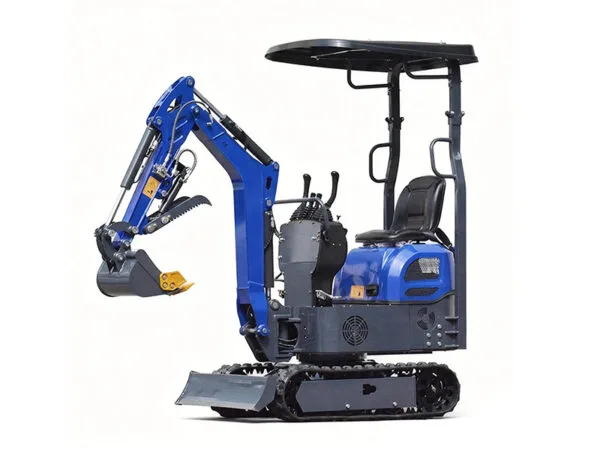
Zero tail swing excavators (ZTS) are machines where the rear counterweight does not extend beyond the track width. This design reduces collision risks and enables work in confined or restricted spaces.
Core Advantages:
- Compact footprint allows 360° rotation in tight areas.
- Ideal for urban projects, indoor excavation, and narrow streets.
- Maintains hydraulic performance despite smaller size.
Components and Engineering
- Swing Mechanism: Reinforced hydraulic cylinders and rotational bearings allow smooth full rotation.
- Boom and Arm: Optimized for short to medium reach while maintaining digging power.
- Counterweight: Designed within the track width for balance and safety.
- Hydraulic System: Efficient pumps reduce energy consumption while maintaining strong digging forces.
Industry Note: Leading ZTS models often meet ISO 9001 quality standards and comply with CE safety regulations, ensuring reliability and safety for commercial projects.
Standard Excavators: Overview
Definition
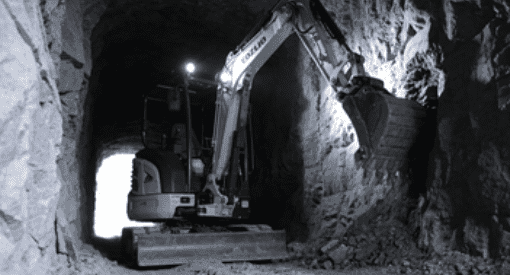
Standard excavators feature a rear counterweight that extends beyond the track width. While less maneuverable in tight spaces, they offer superior stability and heavy lifting capacity.
Applications
- Large-scale road construction
- Mining and industrial excavation
- Heavy lifting, trenching, and material handling
Key Components
- Heavy-duty boom and arm for high lift capacity
- Larger hydraulic pumps for continuous heavy work
- Extended tail swing for counterweight balance
Zero Tail Swing Excavators vs Standard Models
Maneuverability
- ZTS: High mobility in urban environments, can rotate in confined zones without hitting obstacles.
- Standard: Requires larger clearance; risk of collisions in narrow sites.
Load Capacity
- ZTS: Typically 0.2–1.0 m³ bucket capacity, ideal for medium-duty tasks.
- Standard: Can handle 0.5–2.0 m³ buckets for heavy-duty earthmoving.
Job Site Suitability
- ZTS excels in urban construction, landscaping, and utility installation.
- Standard excavators dominate highway construction, mining, and open industrial projects.
Table: Detailed Comparison of Excavator Types
| Feature | Zero Tail Swing Excavators | Standard Excavators |
|---|---|---|
| Swing Radius | ≤ Track Width | > Track Width |
| Operating Weight | 3–10 Tons | 5–25 Tons |
| Bucket Capacity | 0.2–1.0 m³ | 0.5–2.0 m³ |
| Ideal Job Site | Urban, Confined | Open, Large-Scale |
| Hydraulic Pressure | 18–26 MPa | 22–35 MPa |
| Mobility | High | Moderate |
| Safety in Tight Spaces | Excellent | Moderate |
| Average Cost (USD) | $50,000–$120,000 | $70,000–$250,000 |
Benefits of Zero Tail Swing Excavators
Compact Design and Urban Efficiency
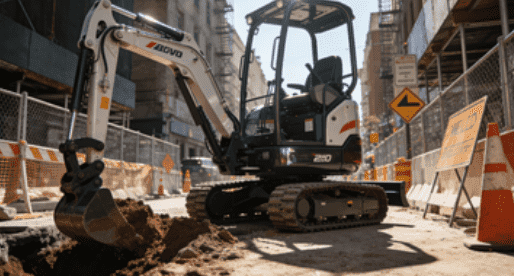
ZTS excavators feature a rear counterweight that remains within the track width, allowing operators to work very close to walls, pipes, and other obstacles without risk of damage. This compact design is particularly beneficial in dense urban environments:
- Reduced Setup Time: Operators can position the machine more quickly due to its smaller turning radius.
- Lower Risk of Collisions: The ZTS design reduces the chance of hitting nearby structures or underground utilities.
- Insurance Savings: Fewer accidents and property damage incidents can result in lower insurance premiums for contractors.
Concept Note: Urban construction often involves tight access points. A ZTS excavator maximizes efficiency by minimizing the need for repositioning or dismantling surrounding barriers.
Safety Enhancements
The ZTS design improves safety in multiple ways:
- Rear Counterweight Contained: Reduces overhang risks in confined spaces.
- Reduced Tipping Risk: Narrow or uneven surfaces are less hazardous for ZTS machines.
- Ideal for Indoor and Renovation Projects: Works safely in residential, commercial, and renovation settings where space is limited.
Tip: Operators should always follow manufacturer-recommended load limits, even though ZTS excavators are designed for safer urban maneuvering.
Operational Advantages
Zero tail swing excavators offer practical benefits beyond compactness:
- Lower Ground Pressure: Minimizes soil compaction, important for landscaping or sensitive ground surfaces.
- Easier Transport and Storage: Smaller footprint allows storage in tighter spaces and easier loading onto trailers.
- Quick Repositioning: Perfect for multiple short tasks, reducing downtime between jobs.
Example: A 5-ton ZTS excavator can be moved between adjacent urban plots without full disassembly, saving time on small projects.
Limitations of Zero Tail Swing Excavators
Load and Reach Constraints
While ZTS excavators excel in compact spaces, their design introduces some limitations:
- Shorter Boom Length: Limits reach for deep trenches or high excavation walls.
- Lower Lifting Capacities: May struggle with very heavy materials such as large boulders or steel components.
- Worksite Suitability: Best for medium-duty construction, landscaping, and utility projects rather than industrial-scale excavation.
Comparison Tip: For projects involving deep foundation digging or large-scale material handling, standard excavators remain the preferred choice.
Cost Considerations
Compact design requires advanced hydraulics and engineering:
- Higher Initial Cost per Ton: Advanced ZTS hydraulics and swing systems increase production costs slightly.
- Investment vs. Efficiency: Savings from faster setup and lower damage risk often justify the initial expense for urban projects.
Maintenance Challenges
High rotation frequency in confined areas can accelerate wear:
- Swing Bearings and Pins: Need regular inspection due to constant pivoting in tight spaces.
- Track and Undercarriage: Monitor for accelerated wear caused by frequent repositioning.
- Hydraulic Components: Frequent maneuvering can stress hoses and cylinders.
Pro Tip: Maintain a rigorous inspection schedule to prevent downtime and prolong machine life.
Choosing the Right Excavator for Your Project
Step 1: Evaluate Job Site Conditions
| Job Site Type | Recommended Excavator | Reasoning |
|---|---|---|
| Confined Urban Space | ZTS Excavator | Compact design avoids property damage |
| Open Industrial Site | Standard Excavator | Longer reach and higher lifting capacity required |
| Mixed Terrain | Hybrid or Mid-Size Excavator | Balances mobility and lifting needs |
Step 2: Determine Lifting Needs
- Medium-Duty Material Handling: ZTS machines handle sand, gravel, or soil efficiently.
- Heavy-Duty Earthworks: Standard excavators are necessary for rocks, large debris, and bulk excavation.
Step 3: Factor Safety and Regulations
- Urban Codes: Ensure ZTS machines meet local building codes for city projects.
- Industrial Standards: Standard excavators should comply with OSHA, ISO, or other relevant safety standards.
Maintenance Tips for Zero Tail Swing Excavators
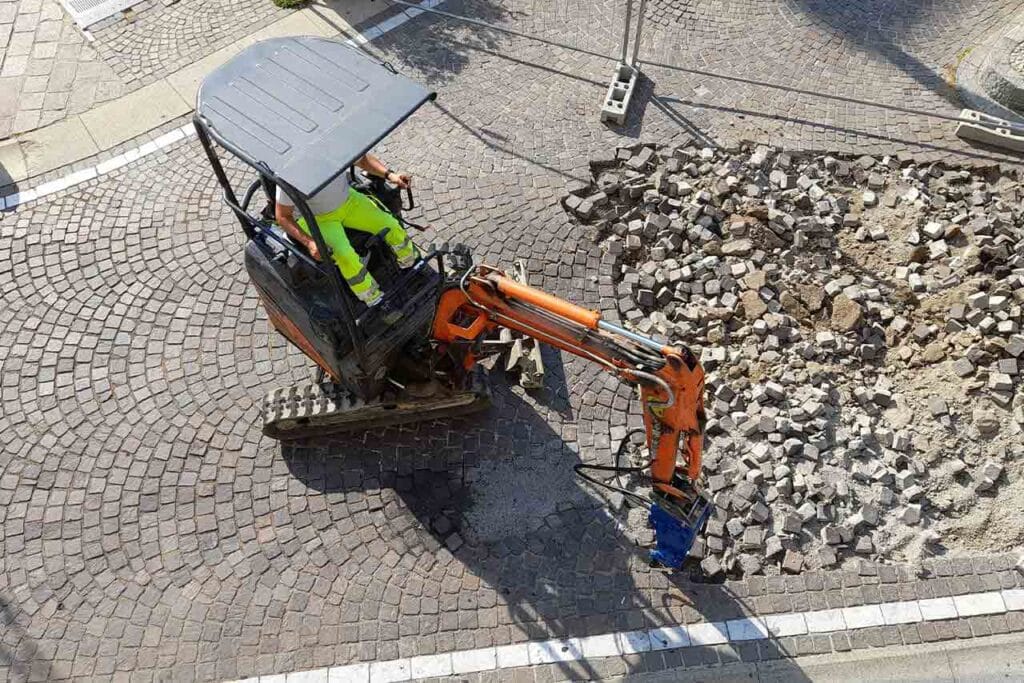
Proper maintenance is crucial to ensure the longevity, safety, and efficiency of zero tail swing (ZTS) excavators. These compact machines operate in tight spaces, which can increase wear on moving parts. A structured maintenance schedule not only reduces downtime but also maximizes operational efficiency.
Routine Checks
Regular inspections help detect minor issues before they become major problems. Key areas to check include:
- Hydraulic Hoses and Cylinders: Look for leaks, cracks, or abrasions. Even small hydraulic leaks can lead to reduced lifting capacity and potential safety hazards.
- Swing Bearings: Inspect bearings for wear, noise, or play in the rotation. Excessive wear can compromise stability in confined operations.
- Pivot Points and Pins: Check for signs of loosening or excessive movement, which can affect boom and arm performance.
- Track Tension and Undercarriage: Uneven track wear can lead to poor machine balance. Ensure tracks are properly tensioned and inspect rollers, sprockets, and idlers for damage.
Pro Tip: Maintaining detailed inspection logs allows operators to track wear patterns and anticipate part replacements.
Lubrication
Proper lubrication reduces friction and extends the life of moving parts:
- Apply grease to all joints, pivot points, and pins weekly, especially in machines operating in dusty or muddy environments.
- Pay attention to swing bearing lubrication; high rotation frequency in confined urban areas can accelerate wear.
- Use manufacturer-recommended grease to maintain warranty coverage and ensure optimal performance.
Concept Note: Regular lubrication is one of the simplest yet most effective ways to prevent premature mechanical failures.
Cleaning
Dirt, debris, and mud can significantly impact ZTS excavator performance:
- Remove mud, stones, and debris from tracks and undercarriage after each use.
- Clean hydraulic cylinder rods to prevent contamination in seals.
- Use pressure washing carefully to avoid forcing water into electrical components or bearings.
Practical Tip: A clean machine is easier to inspect for potential issues and reduces the likelihood of operational imbalances.
Service Schedule
Structured service intervals help maintain efficiency and safety:
- Minor Inspections: Daily checks of fluid levels, track tension, and visual inspection of moving parts.
- Major Inspections: Every 500–700 operating hours, including hydraulic system evaluation, swing bearing replacement if needed, and undercarriage overhaul.
- Hydraulic Fluid Replacement: Follow manufacturer guidelines, typically every 1,000–1,500 hours or annually.
- Filter Replacement: Hydraulic and fuel filters should be replaced as recommended to maintain optimal performance.
Pro Insight: Proactive maintenance can extend the life of a ZTS excavator by 20–30% compared to reactive repairs.
Case Studies
Urban Construction Example
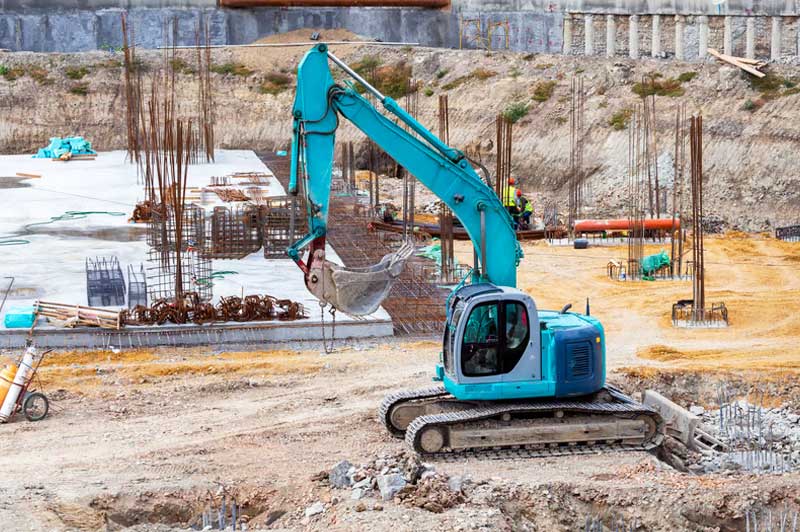
- Location: Downtown London
- Project: Utility trenching for new fiber optic cables
- Equipment: 5-ton ZTS excavator
- Outcome: Operators completed 10 trenches in 3 days without damaging sidewalks or walls.
Industrial Project Example
- Location: Mining site, Australia
- Project: Bulk excavation of gravel
- Equipment: 20-ton standard excavator
- Outcome: Completed 50,000 m³ of material removal efficiently; ZTS unsuitable due to heavy load.
FAQ
Q1: Can ZTS handle high-volume earthmoving?
A1: Generally, ZTS is suited for medium-duty work. For large-scale excavation, standard models are recommended.
Q2: Are ZTS excavators cost-effective?
A2: Yes, in urban projects. Reduced space requirements, fewer collisions, and lower insurance costs can offset higher purchase prices.
Q3: How do I transport a zero tail swing excavator?
A3: ZTS machines are compact and often transportable on standard flatbed trailers.
Q4: Can ZTS excavators operate indoors?
A4: Yes, their compact swing radius allows operation in warehouses, industrial sites, and indoor renovations.
Q5: What maintenance is unique to ZTS models?
A5: Frequent inspection of swing bearings is crucial due to high rotational stress in confined areas.
Advanced Tips for Maximizing ZTS Efficiency
- Combine with telematics to monitor fuel consumption and hydraulic performance.
- Train operators on confined-space maneuvering for safety.
- Use adjustable buckets for different soil types to enhance precision.
Sustainability and Environmental Impact
- Smaller ZTS footprint reduces soil compaction.
- Lower fuel consumption due to efficient hydraulic systems.
- Many manufacturers now offer low-emission diesel or electric ZTS models.
Conclusion
Zero tail swing excavators are perfect for confined, urban, and precision tasks, offering safety, mobility, and efficiency. Standard excavators excel in heavy-duty, high-volume projects, providing power and stability.
Key Advice: Assess site constraints, lifting needs, and safety regulations. Combining ZTS for urban operations and standard models for heavy-duty projects can maximize ROI and project efficiency.
Thank you for taking the time to read our guide on excavators. We hope the insights and tips shared here help you make smarter choices for your construction projects.
For more expert advice, updates, and discussions on heavy machinery, follow our Facebook page and stay connected with our community.