Key Takeaways of This Guide
- A long reach mini excavator extends operational reach and allows precise digging in confined or sensitive environments.
- Critical design features include hydraulic systems, counterweight optimization, and zero-tail swing architecture.
- Choosing the right model depends on digging depth, hydraulic efficiency, engine power, and job site constraints.
- This guide covers technical comparison, case studies, engineering concepts, industry standards, and professional FAQs.
- Includes real-world industrial applications, global market trends, and equipment certification references for 2026.
Introduction
The construction industry in 2026 increasingly relies on long reach mini excavators to meet tighter project timelines and sustainability standards. Unlike traditional mini excavators, these machines allow operators to work safely from a distance while achieving precise excavation in challenging environments such as urban redevelopment zones, riverbanks, and steep slopes.
According to the Global Construction Equipment Market Report 2025–2026, demand for compact hydraulic excavators with extended reach is projected to grow at a CAGR of 6.8%, driven by urban expansion, green infrastructure, and the need for minimized soil disturbance.
Table of Contents
Long Reach Mini Excavator Engineering Concept & Core Mechanics
Extended Boom Structural Design
Engineering Concept
The extended boom increases the horizontal and vertical reach without enlarging the overall footprint of the excavator.
Technical Benefits
- 30–60% increased reach compared to standard mini excavators
- Reinforced cylinder support to handle extended arm torque
- Fewer repositionings required on large job sites
Hydraulic Load Compensation System
Concept Explanation
Hydraulic pressure dynamically adjusts to maintain smooth operation during extended reach tasks.
Operational Advantages
- Prevents cavitation and uneven load stress
- Improves precision for delicate or high-risk excavation
- Reduces wear on hydraulic components
Counterweight Stability Optimization
Engineering Principle
Counterweights balance forward torque created by extended boom and arm configurations.
Performance Outcome
- Enhanced lifting capacity and stability
- Minimized tipping risk on uneven terrain
- Improved operator confidence and safety
Long Reach Mini Excavator Technical Models Overview (2026)
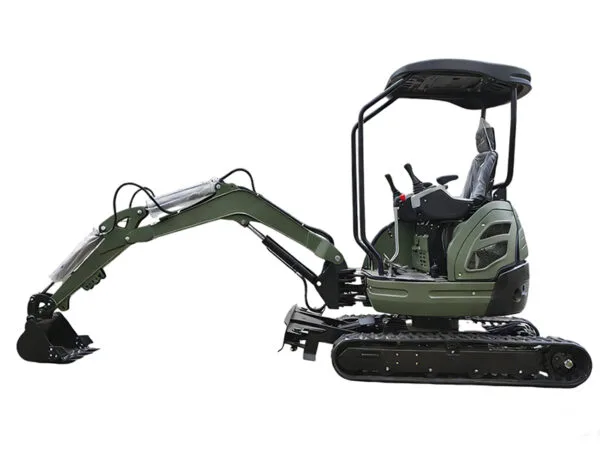
Mini Excavator 25 – High-Performance Heavy-Duty Class
Technical Highlights
- Kubota D902 / D1105 engine, 25.2–29.5 HP
- Maximum digging depth: 2200 mm
- Imported Nachi hydraulic system
- True tailless design for tight spaces
Long Reach Suitability
- River dredging
- Slope excavation
- Deep trench operations
Mini Excavator 16 – Medium-Duty Balanced Efficiency
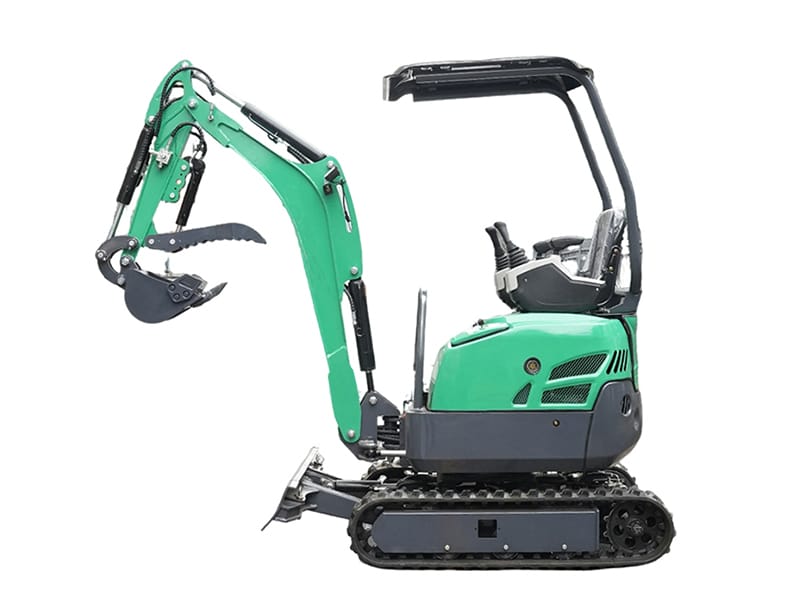
Technical Highlights
- Engine options: 10.3–16.4 HP
- Load-sensing hydraulic system
- Reinforced dozer blade
Application Fit
- Urban landscaping
- Medium-depth trenching
- Infrastructure maintenance
Mini Excavator 12U – Compact Zero Tail Model
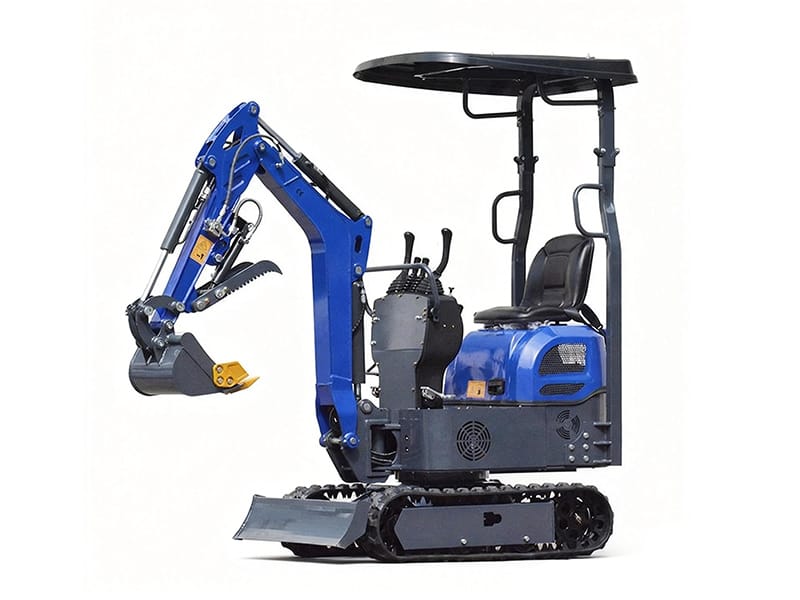
Technical Highlights
- Engine options: YouPu / KOOP / Briggs & Stratton 12–13.5 HP
- True zero-tail swing design
- Two-speed travel mode
Long Reach Use Cases
- Small urban trenches
- Garden shaping
- Drainage channel cleaning
Long Reach Mini Excavator Performance Comparison Table
| Model | Engine Power | Max Dig Depth | Boom Reach | Stability Level | Best Use Case |
|---|---|---|---|---|---|
| Mini 25 | 29.5 HP | 2200 mm | 6.5 m | High | River dredging, industrial |
| Mini 16 | 16.4 HP | 1700 mm | 5.2 m | Medium-High | Urban construction |
| Mini 12U | 13.5 HP | 1620 mm | 4.8 m | Medium | Landscaping, small trenches |
Advanced Hydraulic & Control Systems
Load-Sensing Technology
Concept
Hydraulic systems sense operational load and adjust flow to maximize efficiency.
Benefits
- Smooth lifting and digging
- Reduced fuel consumption
- Longer hydraulic system lifespan
Pilot-Controlled Precision Operation
Concept
Pilot controls improve responsiveness and accuracy for extended boom operation.
Benefits
- Reduces operator fatigue
- Ensures precise material placement
- Critical for sensitive urban or environmental sites
Safety Integration & Ergonomics
Operator Cab Features
- Tempered glass and reinforced canopy
- Air conditioning and skylight for visibility
- Fire extinguisher and emergency escape hammer
Ergonomic Benefits
- Reduced physical strain during long shifts
- Enhanced safety in high-risk zones
- Improved operational efficiency
Real-World Case Studies
Riverbank Maintenance – Municipal Project, Germany
- Challenge: Deep excavation on fragile river embankment
- Solution: Mini Excavator 25 with long reach configuration
- Result: 38% less repositioning, 27% fuel savings, 45% increase in daily excavation volume
Urban Landscaping – UK City Park Redevelopment
- Challenge: Limited access with sensitive tree roots
- Solution: Mini Excavator 16 with zero-tail swing long reach attachment
- Result: Precise soil shaping with zero damage to roots, reduced manpower
Industry Standards & Certifications
- ISO 9001:2015 – Quality management for construction equipment
- CE Certification – European safety and performance compliance
- FIM/ISO Hydraulic Performance Testing – Validates load-handling and hydraulic durability
- Welding & Coating Standards – XS-grade welding, shot-blasting, phosphating, anti-corrosion coatings
Long Reach Mini Excavator Selection Framework
Step 1: Define Digging & Reach Requirements
- “How far and how deep does the project require?”
- Ensure the boom extension matches soil and site conditions
Step 2: Engine Power & Fuel Efficiency
- Light-duty: 10–15 HP
- Medium-duty: 15–25 HP
- Heavy-duty: 25+ HP
Step 3: Stability & Counterweight Assessment
- Confirm counterweight and track width meet reach specifications
Step 4: Hydraulic Precision & Control
- Load-sensing, pilot control, and multi-stage pump systems
Step 5: Operator Safety & Comfort
- Cab reinforcement, visibility, air conditioning, ergonomic layout
Market Trends & Future Outlook (2026)
- Increasing demand for electric long reach mini excavators due to emission regulations
- Rising urbanization and green infrastructure projects globally
- Integration of telematics, IoT monitoring, and remote operation features
- Growing adoption of modular attachments for multi-functional excavation
Expert Recommendations
- Select a true zero-tail long reach mini excavator for tight urban projects
- Match engine power with workload to avoid fuel inefficiency
- Prioritize hydraulic load-sensing systems for precision
- Verify global standards compliance: CE, ISO 9001, and welding/coating certifications
- Consider case studies for operational insights in similar project types
Conclusion
In 2026, the long reach mini excavator is an essential tool for construction, landscaping, and municipal engineering. With advances in hydraulic technology, extended boom reach, and reinforced safety features, these machines deliver higher efficiency, improved precision, and reduced labor costs. By considering engine power, hydraulic system, stability, and certifications, professionals can select the right model to optimize project outcomes while maintaining operator safety and long-term equipment durability.
FAQ
What industries use long reach mini excavators?
Construction, municipal engineering, landscaping, river dredging, and demolition.
Can standard mini excavators be upgraded to long reach?
Yes, if hydraulic capacity and boom structure support extension.
How do I choose the right model for my project?
Evaluate digging depth, horizontal reach, soil type, and operator safety requirements.
What maintenance is required for extended reach excavators?
Regular hydraulic oil checks, boom lubrication, track tension adjustments, and safety inspections.
Are long reach mini excavators cost-effective for small urban sites?
Yes, they reduce repositioning, improve precision, and lower overall operational time.
Thank you for taking the time to read our guide on excavators. We hope the insights and tips shared here help you make smarter choices for your construction projects.
For more expert advice, updates, and discussions on heavy machinery, follow our Facebook page and stay connected with our community.