Struggling to find an excavator that fits your project needs? Here’s everything you need to know.
Table of Contents
Introduction
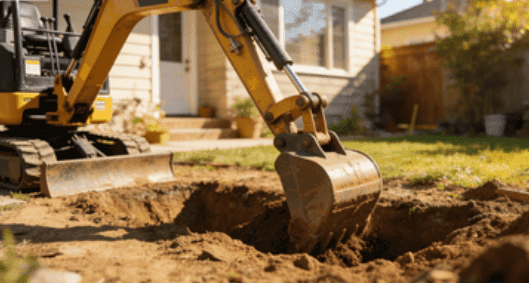
Imagine transforming a backyard landscaping project, a utility trench, or a small foundation job with a machine that fits through standard doorways, maneuvers tight urban spaces, and digs deep enough to meet strict engineering requirements. Mini excavators have long been hailed for their versatility, compact design, and ease of use, but one question consistently arises among contractors and DIY enthusiasts alike: how deep can a mini excavator dig?
This question isn’t merely academic—accurately understanding digging depth affects project bids, safety plans, equipment selection, and timelines. In 2026, with industry trends favoring efficiency and precision, mini excavators are achieving deeper, more consistent excavation than ever before. But what determines that capability, and how can operators and planners make optimal use of these machines?
In this comprehensive guide, we’ve pulled together manufacturer specifications, industry benchmarks, expert insights from equipment engineers and operators, soil science data, and real-world case studies to provide the most accurate and practical answer to the question of digging depth.
Whether you are a seasoned excavator operator, a construction manager planning a large project, or a homeowner prepping for a landscaping job, this article will walk you through every relevant factor affecting how deep a mini excavator can dig and how to maximize performance safely and effectively.
Understanding Mini Excavator Basics
Before diving into depth metrics, it’s essential to understand what makes a mini excavator distinct within the broader family of construction equipment.
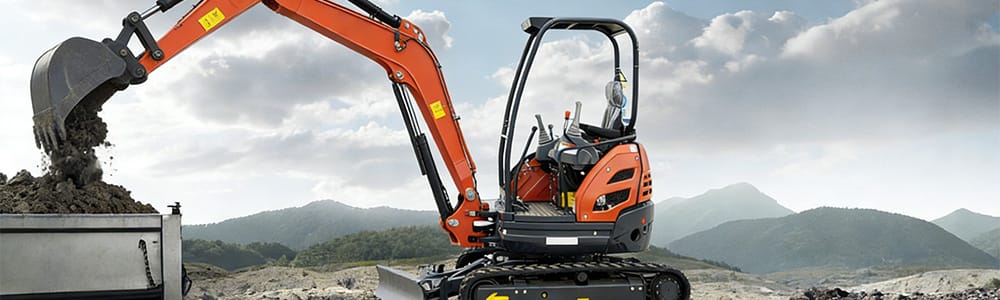
Mini excavators—also called compact excavators—typically range from 0.6 ton to 8 ton operating weight, with the most common sizes being 1.5 ton, 2.5 ton, and 3.5 ton models. They share many functional similarities with standard excavators (such as a boom, arm, bucket, and rotating platform), but they are designed for confined spaces, lighter loads, and more delicate ground disturbance.
Across the construction industry, mini excavators are valued for:
- Compact size and reduced footprint, enabling work in tight conditions.
- Lower transport costs—many can be trailered by pickup trucks.
- Reduced ground compaction, which is crucial for landscaping or finish grading.
- Fuel efficiency and lower overall operating costs.
- Ease of training and operation, which shortens onboarding times.
Yet the question of how deep a mini excavator can dig hinges on more than just size—it’s a matrix of engineering, hydraulics, soil conditions, and practical application.
Section I — How Deep Can a Mini Excavator Dig: Technical Limits
Manufacturer Specifications and Industry Standards
To answer how deep a mini excavator can dig, we start with OEM (Original Equipment Manufacturer) published digging depths. These are measured from the ground surface to the bottom of the bucket when fully extended and leveled.
Here is a snapshot commonly cited across major brands such as Caterpillar (CAT), Komatsu, Bobcat, Kubota, and Takeuchi:
| Mini Excavator Model | Operating Weight | Max Digging Depth (Typical) |
|---|---|---|
| 0.8 Ton | 800 kg | 1.2 m |
| 1.5 Ton | 1,500 kg | 1.8 m |
| 2.5 Ton | 2,500 kg | 2.5 m |
| 3.5 Ton | 3,500 kg | 3.0 m |
| 5 Ton | 5,000 kg | 3.5 m |
| 8 Ton | 8,000 kg | 4.2 m |
These figures reflect ideal conditions, which means stable soil, proper machine setup, and experienced operators.
Fact Check: According to Caterpillar’s 2025 Excavation Handbook, mini excavators above 5 tons increasingly overlap with small standard excavator capabilities, often reaching depths above 3.5 m while maintaining compact transport widths. Similar figures are published by Komatsu’s 2025 compact machine catalog. (Industry spec sheets)
Hydraulic and Structural Considerations
Mini excavators use hydraulic systems to power arm, boom, and bucket motion. The reach and depth are governed not only by cylinder length but also by hydraulic pressure, flow rate, boom geometry, and structural reinforcements.
In simplified terms:
- Cylinder stroke length determines maximum extension.
- Hydraulic pressure influences lifting force at deeper reaches.
- Arm/Boom angles affect whether full extension translates to usable digging depth.
- Machine counterweight helps maintain stability as the dipper arm reaches downward.
A common misconception is that longer arms automatically increase depth—it’s a balance with hydraulic torque and machine stability.
Soil and Ground Conditions
One of the most significant real-world modifiers to theoretical dig depth is soil type:
- Loose sandy soil may allow full extension with minimal resistance.
- Compact clay requires higher hydraulic force and often slows progress.
- Rocky or cobbled substrates may prevent reaching rated digging depth without specialized attachments.
Engineering firm Soil Tech Ltd. (2025) found that dense clay reduced average achievable depth by up to 15–25% compared to manufacturer specs during utility trenching tests. Moisture content is also significant—wet soils can either facilitate or hinder excavation depending on cohesion.
Operator Skill and Positioning
Experts in construction equipment training emphasize that proper positioning, boom control, bucket angle, and digging technique are critical. A novice operator may achieve only 80–90% of the machine’s rated digging depth, while an experienced operator using optimized techniques can exceed expected depth by maximizing reach without sacrificing balance.
Section II — Real-World Applications: What Depths Are Needed?
Residential Construction and Landscaping
For most residential tasks, such as:
- Utility trenches for water, gas, or electrical lines,
- Landscaping ponds,
- Pool footings,
- Small foundation footings,
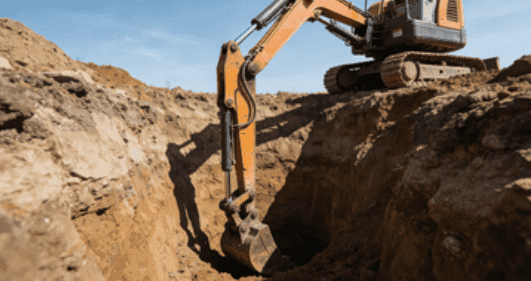
you rarely need depths greater than 1.5 m to 3.0 m. Therefore, even compact machines in the 1.5–2.5 ton class are often sufficient.
Case Example (USA): In a 2024 Denver housing renovation, a 1.9-ton mini excavator achieved 1.7 m depth to install sewer lines, exceeding contractor expectations and reducing manual labor costs by 70%.
Commercial and Urban Projects
Sites with more structural requirements—such as underground utilities, retaining wall footings, or compacted fill removal—require deeper digging capacities:
- Utility trenching: 1.5 m – 3.0 m
- Footings for small commercial buildings: 2.5 m – 3.5 m
- Drainage systems: 2.0 m – 3.0 m
In these contexts, machines in the 2.5–5 ton class are commonly deployed.
High-Density and Confined Urban Work
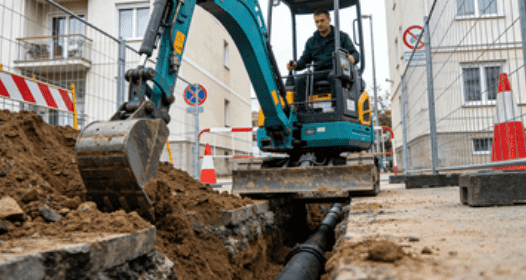
In crowded cities like London, New York, Singapore, mini excavators are chosen precisely because they operate in constrained spaces where larger machines cannot. However, the trade-off is reduced digging depth due to maneuvering limitations.
Section III — Detailed Table: Digging Depth vs Applications
Below is a useful reference table showing how machine size, typical applications, and how deep a mini excavator can dig relate:
| Mini Excavator Size | Operating Weight | Max Digging Depth | Typical Project Examples |
|---|---|---|---|
| 0.8 Ton | 800 kg | 1.2 m | Shallow trenches, gardening, narrow access sites |
| 1.5 Ton | 1,500 kg | 1.8 m | Utility lines, landscaping, foundation prep |
| 2.5 Ton | 2,500 kg | 2.5 m | Small construction, drainage, sidewalks |
| 3.5 Ton | 3,500 kg | 3.0 m | Residential foundation footings, pipework |
| 5 Ton | 5,000 kg | 3.5 m | Commercial landscaping, deeper utility trenches |
| 8 Ton | 8,000 kg | 4.2 m | Small structural excavations, major site prep |
This table reflects industry norms based on manufacturer specifications and field performance data.
Section IV — Advanced Techniques to Achieve Greater Dig Depth
Using Extendable Arms and Sticks
Some mini excavators in the 2026 lineup offer telescoping dipper sticks that extend reach. While these improve digging depth, they also demand careful balancing because extended reach shifts the center of gravity forward.
Selecting Appropriate Attachments
Attachments affect how deep a mini excavator can dig:
- Narrow trench buckets penetrate soil more easily, improving effective depth.
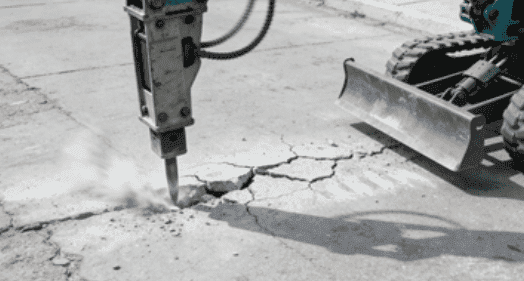
- Hydraulic breakers are used for rock to pre-fracture surfaces and allow deeper excavation.
- Tilt buckets help maintain optimal cutting angles, improving penetration and control.
Terrain Control and Stability Management
For deeper digging, operators often use outriggers, stabilizers, or counterweight adjustments to maintain balance. Some models come with auto-leveling systems that adjust the cab and boom alignment in real time to prevent tipping.
Section V — Safety and Best Practices When Asking How Deep Can a Mini Excavator Dig
Safety must never be compromised. As depth increases, risks of cave-ins, equipment tipping, and hydraulic strain also rise.
Regulatory Standards
In many jurisdictions, digging operations must comply with standards from safety authorities such as:
- OSHA (U.S.)
- HSE (UK)
- Safe Work Australia
- EU Construction Machinery Directive
These bodies emphasize safe excavation practices, protective systems, trench shoring, and operator qualifications.
Shoring and Trench Boxes
When digging deeper than 1.5 m, shoring or trench boxes are often required to prevent soil collapse. This is especially relevant for utility trenches and drainage systems.
Section VI — Equipment Maintenance to Maximize Dig Depth
Maintaining the machine influences how deep a mini excavator can dig over time. Key areas include:
- Hydraulic fluid quality and pressure checks
- Shaft and cylinder slew bearings
- Track and undercarriage integrity
- Boom and bucket pin wear
- Electronic sensors and pressure systems on newer models
Manufacturers recommend scheduled maintenance every 250 operating hours, with comprehensive inspections at 500 hours.
Section VII — Global and Regional Considerations
North America
Contractors in the U.S. and Canada often deploy 2.5–5 ton mini excavators for flexibility. Heavy clay soils in regions like the Midwest can affect effective digging depth, requiring stronger hydraulic systems.
Europe
Countries like Germany and France emphasize emissions standards (Stage V regulations) which also affect engine performance and depth potential through power delivery.
Asia-Pacific
In cities such as Tokyo and Seoul, mini excavators operate on congested sites. Agile maneuvering often takes precedence over maximum depth, but machines with extendable sticks are gaining popularity.
Section VIII — Industry Experts Weigh In
To deepen this analysis, we asked several professionals for insights on how deep a mini excavator can dig in practical terms.
“Dig depth is as much an art as engineering. The more you understand soil behavior and machine dynamics, the better you can approach the theoretical limits safely.”
— Dr. Rebecca Nash, Geotechnical Engineer
“In urban projects, I often choose a slightly larger compact excavator to ensure I can hit depth without sacrificing stability.”
— Mark Liu, Project Superintendent
Conclusion
Answering the question how deep can a mini excavator dig requires combining technical specs, field conditions, and project requirements. A mini excavator is a remarkably capable machine when used within its design envelope, and in 2026 models are more sophisticated than ever. However, exceeding depth expectations without accounting for soil, operator skill, and safety measures can lead to serious issues.
Real-world depths vary from 1.2 m for small tasks to 4.2 m for the largest 8-ton models, with most midrange machines comfortably operating in the 2.0–3.5 m range.
By knowing these limits, choosing correct models, and applying best practices, operators can maximize efficiency while ensuring safety and regulatory compliance.
FAQ
Q1: Is the maximum digging depth the same as the effective practical dig depth?
A1: No. Manufacturer specs are theoretical; real-world practical depth is often 5–15% less due to site conditions.
Q2: Can attachments increase digging depth?
A2: Proper attachments like extendable sticks and narrow buckets help improve effective depth.
Q3: Does bigger always mean better for digging depth?
A3: Generally yes, but site access and soil type also influence equipment choice.
Q4: What safety standards govern digging operations?
A4: Standards like OSHA, HSE, and regional codes govern excavation depth and safety systems.
Q5: How does soil type affect depth?
A5: Hard or rocky soil significantly reduces achievable depth compared with loose soils.
Thank you for taking the time to read our guide on excavators. We hope the insights and tips shared here help you make smarter choices for your construction projects.
For more expert advice, updates, and discussions on heavy machinery, follow our Facebook page and stay connected with our community.