Table of Contents
Introduction
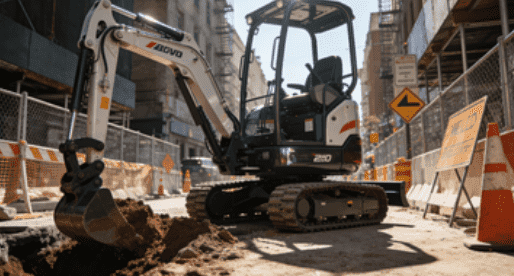
A zero tail swing excavator is designed to work in areas where a conventional excavator may not have enough rear clearance. Its upper structure rotates within, or very close to, the width of the undercarriage, allowing the machine to swing beside walls, fences, roads, buildings, and other obstacles with a reduced risk of rear-end contact.
This configuration has become especially useful for utility contractors, landscapers, residential builders, municipalities, rental fleets, and property owners working in restricted spaces. A zero tail swing mini excavator can often complete trenching, drainage, grading, and landscaping tasks without requiring the same amount of clearance as a conventional compact excavator.
However, zero tail swing design does not automatically make a machine suitable for every job. Reduced rear overhang can affect counterweight layout, side stability, lift performance, operator visibility, and working technique. The right choice depends on the relationship between site access, excavation depth, lifting requirements, ground conditions, and machine configuration.
This guide explains how a zero tail swing excavator works, where it performs best, what limitations should be considered, and how to compare it with a conventional compact excavator.
What Is a Zero Tail Swing Excavator?
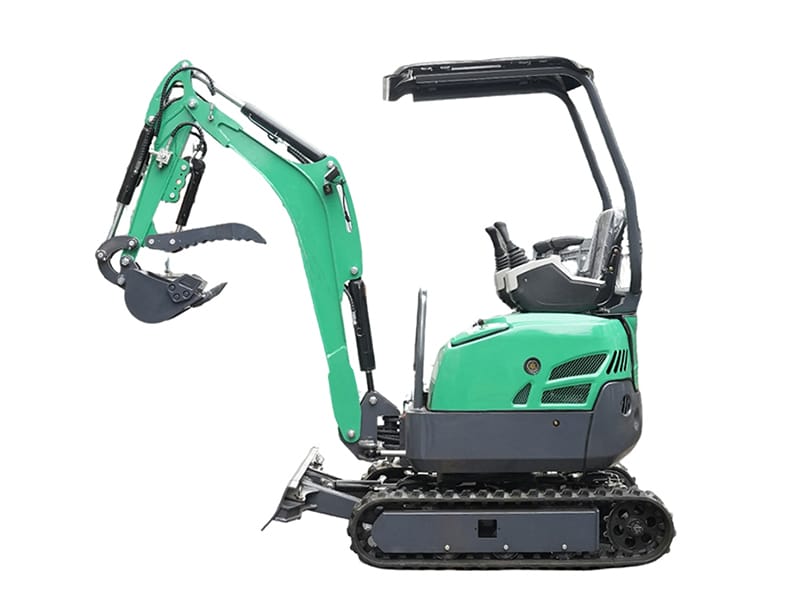
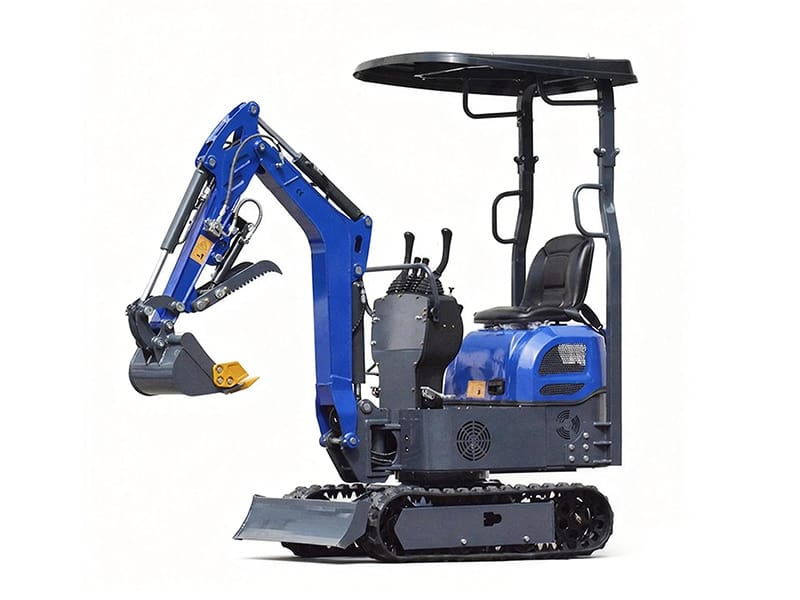
A zero tail swing excavator is a compact excavator whose counterweight and upper body remain within the track width while the machine’s upper structure rotates. When the operator swings the house, the rear of the machine does not extend significantly beyond the tracks.
In a conventional excavator, the counterweight usually projects beyond the undercarriage during rotation. That additional rear movement requires a larger working envelope. In a zero tail swing design, the reduced rear profile allows the excavator to operate closer to fixed objects and within narrower corridors.
The term does not always mean that every component remains perfectly inside the tracks under every operating condition. Some machines use a reduced tail swing arrangement in which a small portion of the counterweight extends slightly beyond the track width. Manufacturers may describe these models as reduced tail swing or minimal tail swing excavators.
Before selecting a machine, buyers should check the actual tail swing radius, machine width, counterweight movement, and boom swing geometry shown in the technical drawings.
How Zero Tail Swing Design Works
The compact rear profile is achieved through the arrangement of the engine, hydraulic components, counterweight, fuel tank, cooling system, and upper-structure frame. These components are positioned to maintain balance without creating a large rear projection.
When the operator rotates the upper structure, the machine’s rear remains close to the track footprint. This allows the excavator to swing in a narrower area, but it does not eliminate the need to maintain a safe exclusion zone around the machine.
The front working equipment still moves beyond the track width. The boom, arm, bucket, and any attachment can strike nearby objects even when the counterweight clears them. The operator must therefore consider the entire working envelope instead of focusing only on the rear of the excavator.
A zero tail swing configuration is most valuable when the machine must repeatedly rotate while working close to obstacles. If the jobsite is open and rear clearance is not a concern, a conventional excavator may provide stronger lifting performance in some configurations.
Main Benefits of a Zero Tail Swing Excavator
Better Performance in Restricted Spaces
The most important benefit is the ability to operate in confined areas. A zero tail swing excavator can work beside buildings, retaining walls, sidewalks, road edges, fences, and property boundaries where a conventional counterweight could collide with an obstacle.
This is particularly useful for residential construction and utility work. Many projects do not offer enough space to position a standard excavator safely while maintaining access for workers, materials, and vehicles.
The reduced rear profile may also allow the operator to work within a narrow lane without closing as much of the surrounding area. Local traffic-control requirements still apply, but the compact machine can simplify positioning.
Reduced Risk of Rear-End Contact
When the upper structure rotates, the rear counterweight is one of the main collision hazards. A zero tail swing design reduces the likelihood of the counterweight striking walls, vehicles, gates, or other structures.
This can protect both the jobsite and the machine. It also gives operators greater flexibility when digging parallel to a structure or swinging material toward a spoil pile located near the machine.
Reduced risk does not mean risk-free operation. The machine may still contact nearby objects through the boom, arm, bucket, attachment, or front corners of the upper structure. Operators must use mirrors, cameras, spotters, and exclusion zones where appropriate.
Easier Positioning for Urban and Residential Projects
Urban and residential jobsites often involve narrow driveways, small gardens, existing buildings, underground utilities, parked vehicles, and finished surfaces. A zero tail swing excavator can be positioned closer to the work area while leaving more room for surrounding activity.
This can reduce the number of times the machine must be repositioned. Better positioning may also improve trench alignment, bucket visibility, and spoil placement.
For landscaping contractors, the design is useful when excavating beside patios, garden walls, swimming pools, garages, and property boundaries. For utility contractors, it can help when working along roads, sidewalks, and building foundations.
Improved Maneuverability
A compact tail profile makes it easier to turn and swing in narrow corridors. The machine can often work effectively in spaces where a conventional excavator would need to reposition repeatedly.
Maneuverability is influenced by more than tail swing. Track width, overall machine length, boom swing function, dozer blade dimensions, travel speed, and attachment size also affect how the excavator moves around the site.
A narrow machine with zero tail swing can be especially useful when entering through gates or passing between structures. Buyers should compare the transport width with the actual access width, allowing room for uneven ground and operator control.
Greater Flexibility Near Obstacles
The machine can dig or load material while remaining close to an obstacle without requiring the rear counterweight to project into a traffic lane or neighboring work area.
This flexibility can be valuable for foundation drainage, pipe repair, road maintenance, curb work, and landscape renovation. It can also help contractors complete small excavation tasks without removing fences or dismantling temporary structures.
Limitations of a Zero Tail Swing Excavator
Reduced Side Stability in Certain Positions
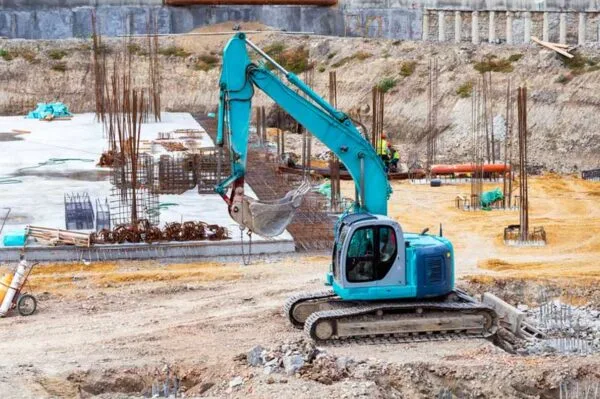
A zero tail swing excavator has less rear counterweight available outside the track footprint. Depending on its design, this can affect stability when lifting or digging over the side.
Excavators are generally most stable when working over the front or rear of the tracks. Side loading, extended reach, uneven ground, and heavy attachments can reduce stability. The effect becomes more significant when the boom is positioned across the side and the load is far from the machine’s center.
The operator must follow the rated lift chart for the exact machine configuration. Operating weight, blade position, track width, attachment weight, and ground conditions all influence safe lifting performance.
Lower Lifting Capacity in Some Applications
A conventional excavator may use a larger rear counterweight to balance heavy loads at extended reach. A zero tail swing model may have less counterweight mass or a different balance arrangement.
This does not make the machine unsuitable for lifting. It means that rated lifting capacity should be checked carefully rather than assumed from the excavator’s operating weight.
If the main job involves frequent lifting of pipes, concrete products, landscaping materials, or other suspended loads, compare lifting charts at the actual working radius. A machine that is ideal for trenching may not be the best option for repeated side lifting.
Less Space for Components
The compact upper structure leaves less room for engine, cooling, hydraulic, and service components. Manufacturers must package these systems carefully to maintain performance and access for maintenance.
Service access can vary significantly between models. Before selecting a machine, inspect how the engine compartment, filters, hydraulic valves, battery, radiator, and fuel system can be reached.
A compact layout should not prevent routine inspection. Daily checks are essential because overheating, hydraulic leakage, low fluid levels, and blocked cooling systems can reduce performance and cause avoidable downtime.
Limited Advantage on Open Jobsites
If the excavator operates on a large open site with no nearby obstacles, zero tail swing may provide little practical benefit. In that environment, machine stability, lift capacity, digging force, bucket capacity, and fuel efficiency may have greater influence on productivity.
A conventional compact excavator with a larger counterweight may be more suitable for heavy digging, frequent lifting, or larger attachments when rear clearance is readily available.
The choice should therefore be based on jobsite requirements rather than the assumption that zero tail swing is always the superior design.
Operator Visibility Still Matters
The reduced rear profile improves clearance, but it does not remove blind spots. The boom, arm, cab pillars, attachment, and nearby structures can still block the operator’s view.
Safe operation may require:
- Proper mirror adjustment
- Rear or side cameras
- A trained spotter
- Clearly defined exclusion zones
- Low-speed travel near obstacles
- Communication procedures with ground workers
The operator should never rely only on the machine’s compact body when people or structures are nearby.
Zero Tail Swing vs Conventional Compact Excavator
The two designs serve different operating priorities. A zero tail swing excavator emphasizes clearance and maneuverability, while a conventional excavator may provide more counterweight and lifting balance.
| Factor | Zero tail swing excavator | Conventional compact excavator |
|---|---|---|
| Rear clearance | Very limited rear overhang | Requires a larger swing envelope |
| Confined-space work | Excellent for narrow corridors | Suitable when additional space is available |
| Side lifting | Must be checked carefully at each radius | Often benefits from greater counterweight |
| Urban utility work | Highly practical | May require more traffic and clearance control |
| Landscaping | Easy to position beside structures | Effective on open residential sites |
| Heavy attachments | Depends on model and hydraulic capacity | May offer stronger balance for larger tools |
| Operator awareness | Rear contact risk is reduced | Wider rear swing requires more caution |
| Transport access | Often available in narrow widths | Width varies by model |
| Best operating environment | Tight, obstacle-filled sites | Open sites and heavier excavation tasks |
This comparison should not be interpreted as a universal performance ranking. A well-designed conventional excavator may outperform a zero tail swing model in deep excavation or heavy lifting, while the zero tail swing machine may complete restricted-access work more efficiently.
When Should You Choose a Zero Tail Swing Excavator?
A zero tail swing excavator is a strong candidate when the project includes one or more of the following conditions:
- Work beside a building, wall, fence, road, or sidewalk
- Narrow residential access
- Utility trenching in developed areas
- Landscaping around finished structures
- Roadside drainage or curb repair
- Work inside a greenhouse, yard, or narrow passage
- Frequent rotation near fixed obstacles
- Limited room for spoil storage and machine positioning
- Need for a compact machine with rubber tracks
It may be less suitable when the project requires constant heavy lifting over the side, large buckets, long reach, or high-capacity demolition attachments. In those cases, a conventional excavator or a larger compact model may provide better balance.
The correct decision depends on the complete project profile, not only the available access width.
How to Match the Machine to the Jobsite
Start by measuring the narrowest access point. Include gates, doorways, fences, walls, tree branches, temporary barriers, and uneven ground. The machine’s published width may not include every attachment or optional component.
Next, identify how the excavator will work after entering the site. A machine may pass through a gate but still lack sufficient room to rotate, lower the blade, load the bucket, or place spoil safely.
The working area should be evaluated for:
- Ground bearing capacity
- Slope and grade changes
- Overhead restrictions
- Underground services
- Nearby structures
- Worker access
- Spoil placement
- Transport route
- Attachment changeover space
Harddig’s mini excavator product range includes compact models with different operating weights, digging depths, bucket capacities, and configurations. Comparing these specifications helps identify whether the priority should be narrow access, greater digging performance, or increased attachment flexibility.
Attachment Selection for Zero Tail Swing Machines
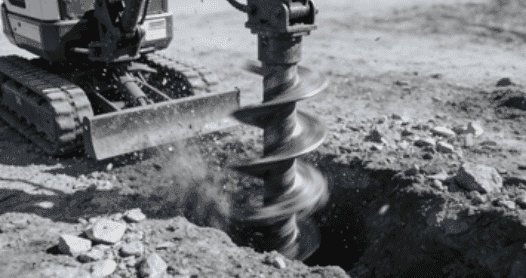
Attachments can change the machine’s balance and working envelope. A bucket, hydraulic breaker, auger, grapple, grading bucket, or compaction tool adds weight at the end of the arm and may require auxiliary hydraulic connections.
A heavy attachment can reduce usable lifting capacity, especially when the boom is positioned across the side. A wide attachment may also extend beyond the compact machine’s normal profile and create new collision hazards.
Attachment selection should consider:
- Carrier weight range
- Attachment weight
- Hydraulic flow and pressure
- Mounting dimensions
- Coupler geometry
- Working width
- Center of gravity
- Required lifting radius
- Ground conditions
- Machine stability
Harddig’s guide to mini excavator attachments explains how buckets, breakers, augers, grapples, compactors, and other tools should be matched to machine weight and hydraulic capability.
A compact machine should not be fitted with an attachment simply because the pins can be connected. Mechanical fit, hydraulic compatibility, stability, and working geometry must all be verified.
Safe Operation Near Obstacles
A zero tail swing excavator reduces rear collision risk, but safe operating procedures remain essential. The operator should understand the machine’s tail swing, front swing, boom swing, track width, and attachment envelope.
Before work begins, identify fixed obstacles and establish a clear operating zone. Ground workers should remain outside the swing radius unless their presence is essential and controlled by a designated signal person.
When working beside a structure, the operator should move slowly and use deliberate swing movements. Sudden rotation can cause the attachment or boom to contact walls even when the counterweight remains clear.
The machine should be placed on firm, reasonably level ground. Working across a slope can reduce stability and make it difficult to maintain consistent bucket control. The blade may improve support, but it cannot compensate for severely unsuitable ground conditions.
For excavation and trenching work, OSHA’s construction trenching guidance emphasizes competent-person inspections and hazard control because soil and excavation conditions can change during the workday.
A zero tail swing design should be treated as a clearance advantage, not as a substitute for training, planning, and exclusion zones.
Common Selection Mistakes
One common mistake is assuming that zero tail swing means the entire excavator can operate without clearance. The boom, arm, bucket, cab, and front corners still require space.
Another mistake is comparing only tail swing radius while ignoring track width. A machine with a narrow rear profile may still be too wide to pass through the intended access route.
Other avoidable errors include:
- Ignoring side-lift charts
- Selecting an attachment that is too heavy
- Failing to check ground slope
- Assuming all zero tail swing machines have equal stability
- Measuring the gate but not the working area
- Overlooking overhead branches or structures
- Placing spoil too close to the excavation edge
- Using maximum reach as the normal working position
- Relying on rear clearance without checking the front envelope
- Neglecting daily inspections and hydraulic maintenance
The best machine is the one that matches the full jobsite, not simply the one with the smallest rear profile.
Frequently Asked Questions
What is a zero tail swing excavator?
A zero tail swing excavator is designed so that its upper structure rotates within or very close to the width of the tracks. This reduces rear overhang and allows the machine to work nearer to walls, roads, fences, and buildings.
Is a zero tail swing excavator safer?
It can reduce the risk of the counterweight striking nearby objects, but it does not eliminate all hazards. The boom, arm, bucket, attachments, front structure, and machine movement still require careful control and a suitable exclusion zone.
Are zero tail swing excavators stable?
They can be stable when operated within the manufacturer’s rated conditions. Stability depends on operating weight, track position, ground conditions, attachment weight, lifting radius, and whether the machine is working over the front, rear, or side.
What jobs are best for a zero tail swing mini excavator?
These machines are particularly useful for urban utility work, residential landscaping, drainage, foundation repair, roadside maintenance, narrow access projects, and excavation beside fixed structures.
Is zero tail swing better than a conventional excavator?
Neither design is universally better. Zero tail swing is advantageous in confined areas, while a conventional excavator may provide stronger balance for heavy lifting, larger attachments, or open-site excavation.
Conclusion
A zero tail swing excavator provides a clear advantage when rear clearance is limited. Its compact rotating profile allows contractors to work closer to buildings, roads, fences, and other obstacles while improving maneuverability in narrow spaces.
The design also has limitations. Side stability, lifting performance, attachment weight, service access, and operator visibility must be evaluated for the specific machine and job. A reduced rear profile does not mean that the complete working envelope is risk-free.
For restricted-access trenching, landscaping, utility installation, and residential construction, a zero tail swing mini excavator can be an efficient and versatile solution. For open sites that demand heavy lifting or large attachments, another excavator configuration may be more suitable.
Need Help Choosing the Right Compact Excavator?
Share your site width, required digging depth, ground conditions, attachment needs, and working environment with the Harddig equipment team to identify a mini excavator configuration suited to your project.